The Fundamental Principles Of Careful Business Storage

Collaborative post – may contain affiliate links

As a business with tangible assets that need taking care of, carefully storing inventory can be an important part of your weekly task management. As such, it’s best to both store these materials carefully and protect them year-round, to ensure that your fundamental investment always holds the same value on your books. 

In some cases, storage can matter more than simply holding an item of value within your building. For instance, the constituent parts of a new prototype designed product may need to be carefully hidden in order to keep your announcement fresh and to prevent the competition from spying on you, or iterating on the design before you can.

This means adhering to the fundamental principles of careful business storage. Not only this, it means training your staff in their correct execution, and also ensuring that any storage environment is more than cut out for items you hope to keep track of. This is not an advisory task, but rather something vital to the careful productive planning of your enterprise. With that, we’d love to advise you in the best possible sense:

Security

Secure storage is an important aspect of caring for your goods and ensuring they’re well protected from the moment they enter your facility to the moment they leave. This is where building integrity such as that offered by metal roofing can be an adequate service to use. Keypads, ID cards that allow access, and ensuring that items are well packaged, protected and locked can help to no uncertain degree. Security matters, so be sure to make good use of it, else you’ll be prone to losing your value through difficult means.

Monitored Conditions

Keeping the conditions monitored in said environment can be a worthwhile use of your time. It may be that certain items are best preserved in a chilled or room temperature environment, sometimes in a dark place where UV light cannot interrupt its careful and protected storage. Monitored conditions may also be quite intensive in need, such as ensuring the room is continually moisture-less or clinically clean from the offset. Temperature gauges, cameras, earthquake protections and light conditions must routinely be considered and cared for if you’re to ensure your products are carefully preserved.

Rotation & Staff Handling

It’s worth categorizing your stock in a manner that allows for an immediate rotation of your supplies. This allows you to keep ensuring that the long-stored items are used first and vice versa. It’s also worth ensuring that staff are trained in how to handle certain items, The lifting machinery they may need to use to transport palettes, for instance, or the protective gear they may need to wear should also be vetted and fitted correctly. It can also be that basic safety training, such as confirming to lift with their legs rather than their feet, can provide them with worthwhile and advantageous reminders throughout the year.

With this advice, you’re certain to adhere to the fundamental principles of careful business storage.

Is Your Brand Under Attack?

Collaborative post – may contain affiliate links

When your brand is attacked, it can have a devastating impact on your company’s reputation and your ability to attract customers. It’s therefore important that you know the appropriate response to take. Here are just a few ways in which you brand can come under attack and how you can protect it.

A customer is badmouthing you online

Negative online reviews and defamatory tweets can be enough to bring down a business. Many consumers now research a company online before choosing to buy from them – if bad reviews and hostile social media comments are the first thing that show up on Google, you may fail to win over their trust.

When faced with online criticism, be apologetic and respond directly to the review or social media message if possible (on social media, you may want to message them directly as well as replying publicly). Encouraging happy customers to leave positive reviews may meanwhile help to outweigh any negative criticism.

Your intellectual property has been stolen by someone else

Intellectual property is a major part of a brand’s identity and may include your brand name, your logo, a slogan, company images or text from your website. If another company is claiming ownership of your intellectual data, it could cause your customers to mistake them for your company.

This could be something that you can legally dispute – especially if you’ve trademarked or copyrighted this content. By hiring a law firm that deals in corporate litigation, you can make a claim against the company that has stolen your intellectual property. If an online fraudster is using your intellectual property for malicious purposes, you may even be able to get police involved.

Another company is attacking your brand

Brand wars have become more common in the age of social media with large brands attacking one another on Twitter. This is usually done in jest and can sometimes encourage healthy competition. However, sometimes it can get more serious, such as accusing you of bad behavior.

Respond to these brands accordingly. If it’s a light-hearted attack, you may be able to respond with a similar light-hearted retort. However, if they’re uncovering unsavory truths about your business, you may need to come clean.

A media outlet has attacked your brand

An attack from a newspaper, magazine or major online publication can be serious. Word could spread and you could find that business is severely affected.

Taking on the media by yourself is not recommended and you may want to hire a PR company to help try and recover your reputation. Such a company may be able to help you find journalists to argue your case and spread good information about your brand.

Move Forward With Your Business Like A Pro

Collaborative post – may contain affiliate links

Your business may be doing well but there are always ways to take it to the next level. You can be sure that there are always ways to create a better working life and here are some top tips to implement!

Implement and strategize and be sure that you take action on it

There’s a lot of information online with and you can change your strategies and use them to grow a business bigger but you may think that you want to focus on one main area of your business and then you will see or think up another business strategy and you will see it’s popularity and you ditch your old ideas. You may be stuck in this way of thinking, without going forwards or settling on any one idea for your business. Perhaps your goals are smaller and you want to look only at things such as a new phone system – https://www.lingo.com/business/hosted-pbx/ but this is simple to get into place. What’s harder is avoiding procrastination and not settling on a long term marketing goal; so start to look at doing not thinking. Do the pitching. Do the follow-up. Chase clients, be sure to get the marketing done and self promote, get things done

Slowly rid yourself of stressful clients 

Freelancing is a lifestyle not just a job and you may find you work round the clock trying to chase people and keep your clients but what if you have a client who is causing more trouble than not or perhaps they’re getting really good value for money and you want to put your time into something and someone else?  Better clients and opportunities always come when you are in a good headspace and know what you want. Ditching a client may seem rude or harsh but it can also be good for your mental health and growth of your business also. Don’t worry about it. After all you want your clients to be happy too and you want them to have good relationships with you including great customer feedback https://growingforward.net/2020/02/26/4-ways-to-get-high-quality-customer-feedback/ so be sure that you’re achieving it.

Attend events locally and nationally and see them face to face 

Seeing people in person is so much better because people are buying you not your service so a good personable attitude and know how is going to earn you a lot! People are starting to appreciate the importance of an in-person connection with influencers and freelancers and this is important to create your own meetings, make yourself important and get yourself out there and see people. Look for events and local gatherings and get your business cards printed. Try to attend an event per month or maybe quarterly and see how business flourishes, it’s important to network and anyone who says it isn’t is most definitely wrong, because the more people you meet, the more you expand your database and opportunity. You can read more about that here https://blog.growthlab.ng/scaling/7-reasons-attend-networking-event/.

Ways You Can Stay Ahead Of The Competition

Collaborative post – may contain affiliate links

If you want your business to succeed over the long-term, then it’s vital you stay ahead of your competitors and know what they’re up to and rolling out next. You risk losing paying customers if you fall behind, and others are outsmarting you in every area of your business.

Learn how you can maintain your position as a leader in your industry and get ahead of the competition. These actions will be well worth your time and energy and will likely deliver exceptional results that will be worth noting. You’ll be a much happier business owner when you’re attracting new customers and maintaining a loyal book of clients throughout the years.

Offer High-Quality Products

One way to stay ahead of the competition is to offer high-quality products that are long-lasting and don’t fall apart. Make sure they meet industry standards and regulations and are safe for consumer use. You can accomplish this goal by contacting rapidpsi.com and experimenting with 3D printing as a way to speed up production and improve the quality of your offerings. It’ll give you an edge over your competition and prove to others that you’re up to speed with the latest developments in technology.

Implement Creative Marketing Tactics

Keep ahead of your competitors by using creative marketing tactics to build awareness and excitement around your business and products. No one is going to make purchases from you or talk about you unless they know what it is you do. Clearly explain the benefits of working with you and what you bring to the table. Position yourselves as experts in your industry by sharing exciting and engaging content on your website, company blog, and social media.

Build an Attractive Company Culture

You can also stay ahead of the competition by being the employer of choice among employees and potential candidates. Focus on building an attractive company culture and reward your staff fairly for their performance. Make the workplace a fun and exciting place to be, but also make it known that you all work hard and are continually achieving your goals. Employees and job seekers will spread the word for you, and you’ll be able to set your business up as a top place to work in your community and even around the country.

Offer Superior Customer Service

Satisfied customers can go a long way in helping your business to succeed and thrive. Stay ahead of the competition by putting your customers first and ensuring they’re happy at all times. Solve problems quickly and address issues professionally so that you can close the loop and make sure consumers feel confident in your business and trust you. Train your employees to know how to handle all types of situations and to help them understand the significance of offering superior and consistent customer service. Not only get to know your customers better but look after them and do what’s in your power to confirm they’re pleased with your service and products. Ask questions and seek feedback to help you work through any hesitations your customers are feeling.

Ensure Your Business Name Stands For Quality

Collaborative post – may contain affiliate links

It’s unlikely that the businesses you are most fond of are happy to provide you with less quality at a price point comparable to other businesses within that category. We all know that a business’s primary function is to break even and then grow profit, but that must happen in a manner that is not predatory and impossible for your customers to appreciate.

The best way to curate goodwill, ensure repeat purchases, stand proud in your firm, attract skilled job candidates, network with confidence and enjoy what you do is simply to ensure your business name stands for quality. Of course, this is not as ‘simple’ as it may first seem. There are many complex considerations that go into a business product for it to become a quality item worthy of regard, and in order to achieve that, you have to approximate certain standards and best practices to your aid, going over and above the baseline legislation you need to meet.

But how should those complexities be regarded? In the following advice, we’d love to help you explore that:

Product Quality

The quality that goes into the products you make is essential, and it’s often found in the smaller details of its design and construction. For instance, the optical bonding you use for a fantastic and shielded dashboard display may help your small design gain so much more value over the competition thanks to how tightly it is sealed, how easily it is cleaned, and how aesthetically comforting it looks. Product quality should also be defined within the best of the best safety standards in order to boast a worthwhile and comprehensively marketable product.

Excellent Support

Excellent support offered alongside your product experience can be fantastic. Reliable web chatting services, the ability to call your staff, or (in an increasingly relevant sense) social media directing messaging can be very convenient. Additionally, emails that ask how the customer is getting on after their purchase can be a great idea. 

Support can also come in the form of an excellent FAQ on your website, a place for users to discuss their experience and help one another out, as well as a cared-for willingness to replace or refund customers that may not have had a good experience, on top of doing your best to settle that particular complaint.

The Customer Experience

The customer experience matters, and it must be taken into account as a full spectrum of consideration. For instance, the opening seconds of a new packaged item matter, and will be one of the first impressions of the careful UX design laid forth by your product architects. If you can enhance the customer experience from the moment they enter your store or the ease of which they can browse your website, this is even further improved. Don’t be afraid to keep refining and tweaking your output until your business becomes more than a service – it becomes a lifestyle.

With this advice, you’re sure to make your business name stand for quality, in the healthiest sense.

Outsourcing For Outstanding Outcomes: Which Tasks Can Benefit From The Modern Method?

Collaborative post – may contain affiliate links

The concept of outsourcing isn’t anything new. Still, its implementation has become increasingly commonplace in the digital age. In fact, most companies now utilize this approach in some capacity. Whether you’re about to launch a new venture or wish to expand your established company, outsourcing can achieve great things. But only if you use it in the most appropriate situations.

Here are five of the best choices at your disposal.

1| IT Management

Computer technology plays a more important role than ever before. However, finding the space and resources to unlock the full potential of modern tech is almost impossible. Outsourcing to a managed IT service can aid productivity, security, and more. Hiring a software developer can be a very useful step too, enabling your venture to run smoothly. For the sake of time and money, this approach can revolutionize your business by helping employees and customers alike.

2| Marketing

Nobody knows your business or products better than you. Sadly, this doesn’t necessarily mean that you’re the best person to promote them. You do not think like a customer, which is why your ideas may not resonate with prospective leads in the way you’d hoped. Using SEO specialists, video production companies, and branding experts can all help. In today’s climate, influencer marketers are an integral feature too. Better still, if they are paid on affiliate commissions, you’ll have nothing to lose.

3| Customer Care

Winning new customers is one thing, but keeping them is another. Good customer support is a telling factor that can convert new leads and encourage client loyalty. Given that you do not have the time to field calls all day long, outsourcing this admin task is advised. A virtual receptionist offers the rewards of a call center without the costs. Better still, it’ll save you a lot of valuable time while crucial calls can still be redirected your way. For the best results, this should be supported by online Live Chat facilities.

4| Logistics  

Whether you are a retailer or a manufacturer, the logistics of moving products to your site or a customer can be costly. Taking the DIY route is commendable, but often ill-advised. Using an expert to handle the shipment of oil and gas equipment, for example, is ideal. It ensures that the operations are completed safely and efficiently. Causing damage to items, or breaking regulations, could spell disaster for your business. It’s far better to leave it to the pros, allowing you to focus on other tasks.

5| Bookkeeping

If the firm is large enough to boast its own accountancy team, that’s great. If not, though, using small business accountants is a far smarter move than doing it yourself. The additional investment may feel like an unwarranted expense. In reality, taking care of the issue internally is a false economy. An expert in the field can actively generate savings on your behalf. When added to the money you can earn by avoiding the need to dedicate some of your time to bookkeeping, the incentives are clear.

4 Ways To Get High Quality Customer Feedback

Collaborative post – may contain affiliate links

Brands should never underestimate the power of customer feedback. Whether positive or negative, companies can use this valuable data to improve their services and marketing in the long run. Consumers will often check out company reviews before committing to buy; with this in mind, great customer reviews are vital to success. It can be useful to offer customers incentives to provide feedback. Beyond this, try out these four methods.

1 . Live chat

If you don’t already have a live chat feature on your site, there are plenty of benefits to changing that. First off, many customers prefer communicating via instant messaging as opposed to a phone call. Live chat is quicker, and there’s no need to wait on hold. Secondly, chatbots can be programmed to deal with a huge range of queries. The AI technology involved is designed to closely resemble human interaction. Live chat is fully scalable because the software can serve a huge number of customers at the same time. Due to this, you remove pressure on your customer service staff. You can program a feedback request that pops up when the chat session is coming to an end.

2 . NPS Surveys

A Net Promoter Score Survey asks customers just one question to determine how satisfied they are with your company. The question is usually, ‘how likely are you to recommend (brand name) to a friend?’ Users are given the opportunity to answer this question on a scale of 0-10. NPS is based on the idea that the ultimate test of consumer satisfaction lies in this question. The concept behind NPS software is that consumers do not like to fill in long feedback surveys, and in fact, they are often unwilling. Consumers will more readily answer one question, providing you with a satisfaction score that tells you all that you need to know.

3. QR Code

QR codes are cropping up everywhere in marketing campaigns these days. There are codes to access product info, codes for instant checkout options, or those brand-themed music playlists. You can also use QR codes as a way to ask for customer reviews. Customers enjoy the unique experience of scanning a code via their phones to access a feedback application. It’s also quick and easy, and these are the feedback methods that tend to be the most effective. It all revolves around the issue of time, as many people are too busy to engage themselves in a lengthy feedback process. Sites like Flowcode offer some great solutions for creating QR code, plus tracking associated data.

4. Social Media

Customers love to talk about brands on social media, so if you monitor all of your mentions, you’ll be sure to gain some top insights. Remember that all feedback requires a response, whether positive or negative. When you take the time to engage with your customers in this way, you’ll be presenting yourself as a trustworthy brand offering a quality service. The more that you engage with your consumers on social media, the more likely you are to improve your online presence.

Measuring the Success of Your SMS Marketing Campaigns

Improve your SMS messaging strategy by understanding what the metrics are saying.

We live in a mobile-driven world and that’s why SMS messaging is becoming such an important marketing tactic for many businesses. 

Just take a look around. There’s a very good chance that nearly everyone is in sight in on their phone, and if they aren’t actually on their phone, they have it close by. As a society, we’ve become so attached to our mobile devices that they’ve named a phobia after it: nomophobia.

Smartphone and mobile device usage spans across every age group. When you consider that over 50% of (most) generations have a smartphone, it’s hard to ignore the idea of SMS messaging.

This is why SMS messaging is such a big opportunity for companies around the world. If people can’t be apart from their phones for more than 10 minutes at a time, it’s the perfect place for businesses to reach customers.

So what happens after you’ve jumped on the SMS messaging bandwagon? How do you know that your campaigns are producing positive results?

These are common questions for companies just starting out, and for those who have been in the SMS marketing game for a while. With a number of different ways to measure your campaign and SMS messaging strategy, how do you know what metrics are most important?

In this article, we’ll take a look at a few different areas that can help you determine the success of your SMS messaging efforts. Here’s a quick look at what we’ll cover:

  • Tracking click-through rates
  • Watching for positive and negative changes in your subscriber list
  • Knowing exactly how much your subscribers are costing you
  • Monitoring conversion and response rates of your campaign

The Importance of Measuring Campaign Success

It’s important to measure the success of your campaigns to know what worked well and what didn’t. You should be visiting your campaign metrics while the campaign is active and then taking a deep dive into the date upon completion.

If you don’t take the time to review the metrics while the campaign is active, you won’t have an opportunity to make any quick and easy adjustments. These simple tweaks could help improve the overall success of the campaign in the long run.

On the other hand, if you don’t take time to look back at the campaign as a whole you won’t learn from the good or the bad. It’s always good to see what your customers are engaging with most and what isn’t working as well — then you can apply this to future campaigns.

With all the data out there, it can be hard to determine what metrics are the most important to focus on. While it may change based on your specific needs, the following metrics are a great place to start.

Track Click-Through Rates

Click-through rates are one of the first things you should look at when measuring your SMS messaging campaigns.

A click-through rate will help you determine the percentage of subscribers who actually clicked on the link within the SMS message and went to the corresponding page. Once someone clicks to the designated location, often a landing page on your website, they can make a purchase or learn more about the topic.
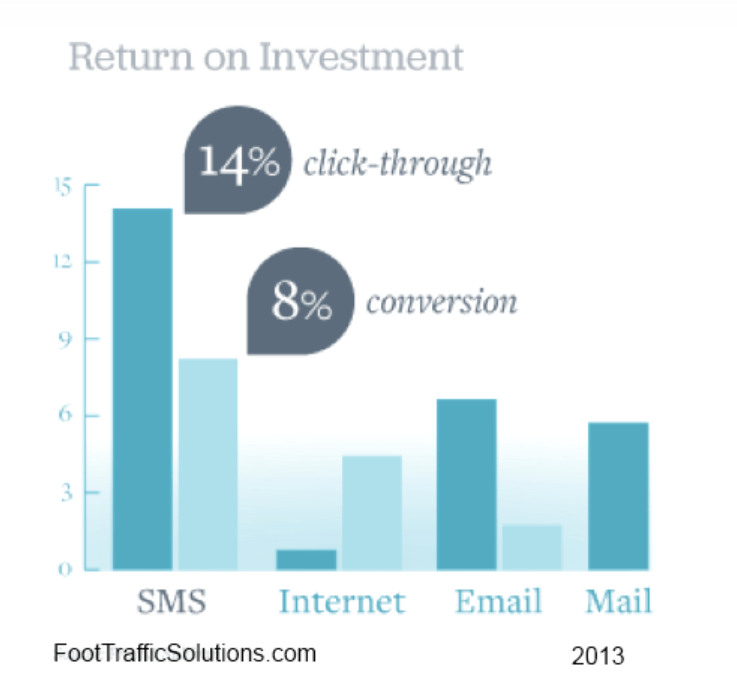
Tracking campaigns by click-through rates will help you clearly see how well it performed. Not only that but SMS messages boast an impressive click-through rate. Image courtesy of Neil Patel.

This is one way you can look at and measure how the campaign performed. Because it is related directly to the campaign, you can easily see how many contacts are engaging with the content.

While click-through rates are a great indicator of how the campaign is performing, they may only tell a small portion of the story. In some cases, you may see high click-through rates but a low conversion rate or return on investment. That’s why it’s important to use more than one measurement tactic.

Watch for Changes in Your Subscriber List

Your subscriber list can be a prime indicator of how well your SMS marketing is performing. This metric is a great way to track your SMS messaging as a whole, rather than just on the campaign level. Since subscribers may be enrolled in different programs and receiving different communications, you can see a holistic view of how your content is being received.

There are two different things you should be looking at when it comes to your subscriber list: growth and attrition rates.

Here are a few things to consider when looking at subscriber growth rates:

  • How fast your subscriber list is growing?
  • How often do you want to calculate this — weekly, monthly, yearly?
  • How can you retain your current subscribers?

If you’re seeing a continued increase in growth rates, that means your current subscribers are engaged and you’re continuing to reach new subscribers. As your subscriber list increases, so will your overall ROI.

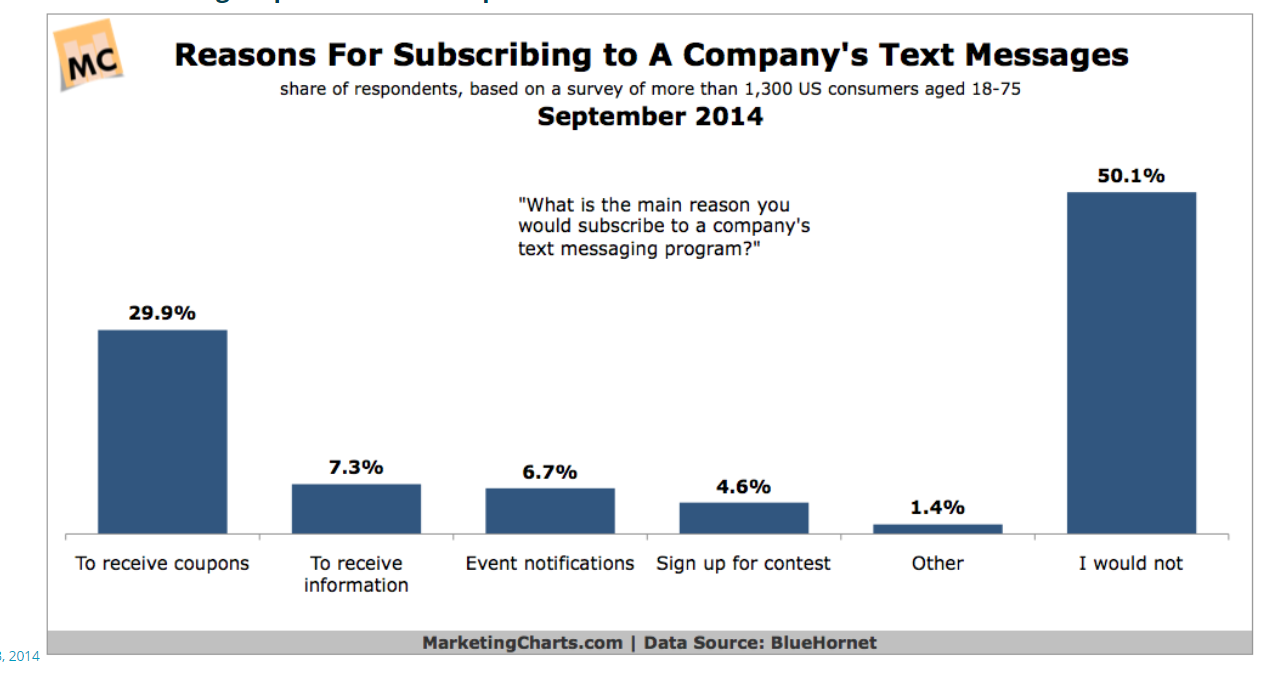
Knowing what trends are happening with your subscriber list is important. There are many reasons why people choose to subscribe to SMS messages, while many don’t want to receive any text messages from companies. 

If your subscriber list seems to be decreasing, these are some things you should ask yourself:

  • Why are subscribers leaving?
  • What content can we provide to better serve our targeted customers?
  • Are we sending too many messages, or not enough?
  • Do we need to better segment and target our subscribers?

Unsubscribes are bound to happen, but you don’t want to see mass amounts of them. People choose to unsubscribe for a number of reasons. Figuring out why your losing subscribers may take some time and testing, but it will be worth the investment to turn those losses into active customers.

Know Your Cost Per Subscriber

Your subscribers are the most important part of your SMS marketing plan. Not only do you want to make sure you’re growing your subscriber list, but you should also know exactly how much you are spending per subscriber.

You have the ability to identify a cost for every single lead you bring in and determine whether it was a profitable move or not. To calculate this, divide the cost of each SMS delivered by the conversion rate of the campaign.

A successful campaign will have brought in more money than it cost to implement. If you find the cost to run the campaign was higher than the ROI based on the calculation above, you need to take a step back and reevaluate your priorities.

As you begin to identify the cost of your campaigns, you can learn more about what offers and incentives you can provide your users. Maybe a campaign offering a 30% off coupon only lets you break-even, while a 20% coupon provides you with a positive ROI.

Testing different ways to reach your subscribers will help you identify the types of content that your customers engage most and what is most profitable for your company. Chances are good the first SMS campaign you launch might not be the highest performing, but learning from that will help you improve.

Monitor Conversion and Response Rates

This one will probably come as no surprise, but monitoring your conversion and response rates is one the best way to measure the success of your SMS marketing. These metrics provide you with details about how many of your subscribers actually took action and interacted with your campaign.

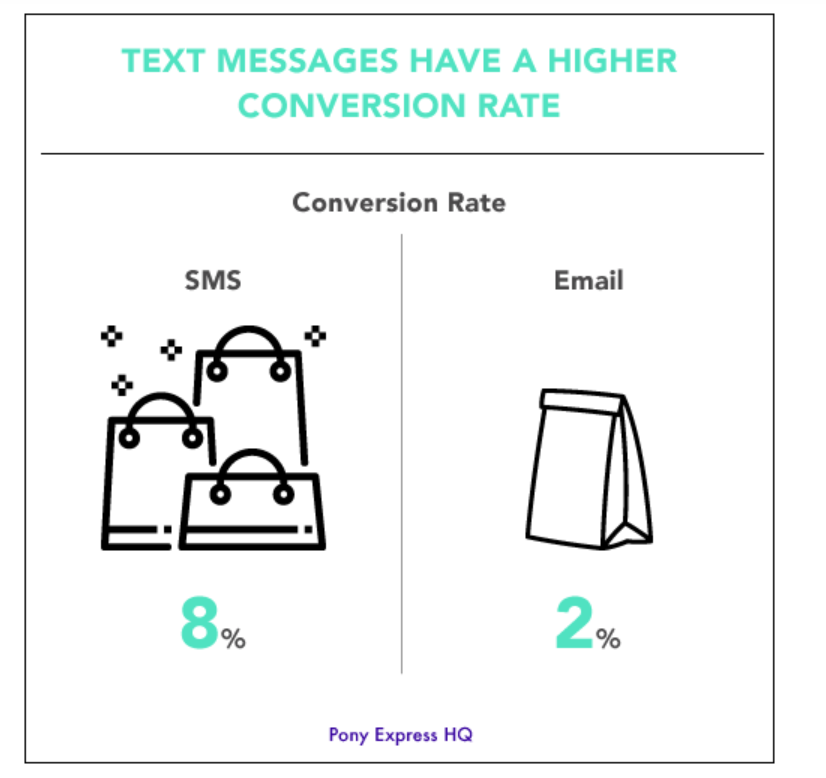
Conversion rates can provide you with details on exactly how many customers interacted with your campaign. SMS messages provide you with a higher conversion rate than email.

The conversion rates of your campaign will identify exactly how many customers clicked your call to action or took the next step. This could be signing up for a new program, visiting your website, or actually making a purchase.

Conversion rates are directly related to each campaign and can help you clearly identify what campaigns are working and which are not. You can use this information to cut poor performing campaigns short, and duplicate tactics from your top-performing programs.

Response rates are directly related to how many customers actually responded to your SMS messages. This is one of the many reasons SMS messaging is becoming so popular — you can actually engage in a conversation with your customers as part of the campaign.

Improve Your SMS Marketing Metrics

Having a clear understanding of how to measure your campaign success will help you focus on the right details to improve future projects. Analyzing multiple different metrics can help you identify areas of improvement and let you continue to grow your subscriber lists. SMS marketing is a great avenue to engage your subscribers and by tracking the right metrics you can set your campaigns up for success.

Choosing the Best Accountant for Your Small Business

Collaborative post – may contain affiliate links

So you’ve started a small business, and things seem to be going well! Numbers for the first year look good, and now it’s time to file those dreaded taxes…

…but there’s no need to reach for the antacids just yet. Finding the perfect accounting company for your small business doesn’t have to be an insurmountable task. With just a quick list, you can find the accountant that’s the perfect fit for you.

Compatibility

It seems like a no-brainer, but a lot of businesses don’t actually take this into consideration, and they should. You want an accounting firm that is likable, personable and seems to understand and like you and your business. Of course accounting is a somewhat emotionless job, but that doesn’t mean that you have to settle for an accountant who seemingly doesn’t care one way or the other about your business. Someone who is surly and dispassionate probably isn’t going to go the extra mile to try and save you money.

Picking an accounting company with a team of dedicated, friendly and helpful employees is a must. 

Reputation

You want to pick a firm that has a good reputation among their clients – everyone from small businesses like yourself, to larger ones and even individuals. Do they have a lot of clients? Have they gotten them great returns? Do they have a good rating? You should find the answers to these questions before making any concrete decisions. 

Experience

When it comes to your business, you can’t be too careful. You want an accounting team who has many years’ experience dealing with businesses just like yours, who know the ropes, the ins and outs of budgets, payroll, taxes and everything in between. These seasoned accountants won’t miss a single opportunity for a deduction or write-off. They know the special laws and guidelines, incentives and work-arounds. The professionals who have been at it for a while are the ones you want. 

Fees and Costs

You should be prepared to pay your accountant a fair rate for working on your taxes, especially if you have a lot of paperwork and documents to go over. Doing taxes isn’t a walk in the park, and the costs reflect that. 

That being said, some accounting firms take advantage of their clients by charging exorbitant rates, coasting on the hope that their clients don’t know any better, or that they’re so desperate to hire an accountant that they’ll accept higher rates. Don’t fall for it. Take the time to compare various accountants in your area and find the ones that offer fair rates that aren’t overly inflated or full of extra fees and service charges. 

Choosing the best accounting company for your small business need not be a hassle or a lesson in anxiety. With so many reputable companies and individuals doing taxes in your area, you’ll have a wealth (pun intended) of candidates to choose from, all offering excellent service and dedicated to getting you every penny they can on that tax return.

Tips To Help Protect Your Business From Disaster

Collaborative post – may contain affiliate links

Protecting your business from harm’s way is important because when you’re in the public domain, you can be an open target for many things, whether that’s customers who are angry at your company’s service or hackers who are trying to steal your data. There’s plenty of dangers for a business, so here are some tips to help protect it from disaster.

Backup Your Files

Backing up your files is an important process that you should be doing already, and if you’re not, there’s a lot of risk that could come your way by not doing so. When backing up your files, you want to store this data off-site. That’s because if your building was to burn down or get ransacked by burglars, then there’s the likelihood of your data and files as a whole becoming compromised or destroyed. That’s why a lot of companies will keep their data in a cloud system, or they’ll store it off-site, perhaps with their IT support if it’s outsourced. When looking at backup and disaster recovery solutions, you want to find a company or process that will make sure you’re left with a back-dated or up to date version of your files, should anything ever go wrong with the originals. If you don’t, then it could be something that ends up killing your business if you’re not careful.

Make Sure The Premises Are Secure

The premises to your building need to be considered too because no building is really safe unless it’s got a good system in place that deters anyone from breaking in. There should be a process in place that enables all staff to lock up the building safely if needs be. Take a look at your current setup for your workplace, and if you don’t think it’s to a reasonable standard, security-wise, then it’s important to make the changes necessary to tighten that security. That could mean having a doorman on the door to stop any unwanted guests from coming into the building. It might be having a card system to make sure it stops anyone unwanted from coming into or up to the main office areas.

Shred Everything

When it comes to handling customer data, you’re responsible for making sure that data doesn’t get leaked or land in the wrong hands. Shredding is a process that helps protect your business so that if you’re throwing these files out in the general trash, it will be much harder for that information to be stolen. You should really have a service that collects confidential papers or shredding and destroys them properly.

Be Wary Of All Financial Decisions

And finally, be wary of all financial decisions that are made for the business. The finances of a company are imperative to keep healthy, otherwise that’s what usually makes a company go under. Be careful of spending and how much money comes in and out of the business.

Protecting your business from disaster can be done as long as you’re being attentive and taking the right steps to protect it.