4 Ways To Get High Quality Customer Feedback

Collaborative post – may contain affiliate links

Brands should never underestimate the power of customer feedback. Whether positive or negative, companies can use this valuable data to improve their services and marketing in the long run. Consumers will often check out company reviews before committing to buy; with this in mind, great customer reviews are vital to success. It can be useful to offer customers incentives to provide feedback. Beyond this, try out these four methods.

1 . Live chat

If you don’t already have a live chat feature on your site, there are plenty of benefits to changing that. First off, many customers prefer communicating via instant messaging as opposed to a phone call. Live chat is quicker, and there’s no need to wait on hold. Secondly, chatbots can be programmed to deal with a huge range of queries. The AI technology involved is designed to closely resemble human interaction. Live chat is fully scalable because the software can serve a huge number of customers at the same time. Due to this, you remove pressure on your customer service staff. You can program a feedback request that pops up when the chat session is coming to an end.

2 . NPS Surveys

A Net Promoter Score Survey asks customers just one question to determine how satisfied they are with your company. The question is usually, ‘how likely are you to recommend (brand name) to a friend?’ Users are given the opportunity to answer this question on a scale of 0-10. NPS is based on the idea that the ultimate test of consumer satisfaction lies in this question. The concept behind NPS software is that consumers do not like to fill in long feedback surveys, and in fact, they are often unwilling. Consumers will more readily answer one question, providing you with a satisfaction score that tells you all that you need to know.

3. QR Code

QR codes are cropping up everywhere in marketing campaigns these days. There are codes to access product info, codes for instant checkout options, or those brand-themed music playlists. You can also use QR codes as a way to ask for customer reviews. Customers enjoy the unique experience of scanning a code via their phones to access a feedback application. It’s also quick and easy, and these are the feedback methods that tend to be the most effective. It all revolves around the issue of time, as many people are too busy to engage themselves in a lengthy feedback process. Sites like Flowcode offer some great solutions for creating QR code, plus tracking associated data.

4. Social Media

Customers love to talk about brands on social media, so if you monitor all of your mentions, you’ll be sure to gain some top insights. Remember that all feedback requires a response, whether positive or negative. When you take the time to engage with your customers in this way, you’ll be presenting yourself as a trustworthy brand offering a quality service. The more that you engage with your consumers on social media, the more likely you are to improve your online presence.

The Stages Of Project Management

Collaborative post – may contain affiliate links

Getting your project right from start to finish comes down to planning. There are a few stages that every project will go through and that you should be aware of. Project management is not just about managing people, it is about taking care of all the little details too. You will use all your skills and tools to manage people, techniques, hiring, and more to bring your project to fruition.

Initiation

In the early stages, your project might be quite messy. The goals will be defined at a broader level. Plenty of research will take place to see if the project is possible. Some feasibility testing will take place too. 

The critical decision-makers, like stakeholders and board members, will also need to do their own due diligence at this point to decide if the project will go ahead. If everything appears to be in order, there will be a project initiation document arranged that will outline the purpose and requirements of all parties involved. 

Project Planning

Now is where it starts to get really interesting. Most project managers find this a very enjoyable stage. A guide will now be developed for all key players to follow. A few of the most opted for methods are CLEAR and SMART. Here is a quick breakdown:

SMART – Specific, Measurable, Attainable, Realistic, Timely

CLEAR – Collaborative, Limited, Emotional, Appreciable, Refinable

By now, the complete scope of the project is clear. All of the roles and responsibilities are cemented, and everyone is now accountable. The following will need to be written up:

  • Work Breakdown Schedule
  • Milestones
  • TimeLine
  • Communication Plan
  • Risk Management Plan

Execution

All of the deliverables are on paper and completed. Most of the work will now take place in this phase. There will be many meetings, performance updates, status updates, and hiring too. Many moving parts mean it will be all hands on deck. 

The team will be developed now. The first people in will likely be contractors and surveyors like Thurlow. You might also need designed, extra assistance and more skilled workers too. 

  • Resources being assigned
  • Execute the project management plans
  • Procurement if required
  • Tracking
  • Status meetings
  • Continuous updates of the project status

Execution and performance will overlap. 

Performance

This section will have already been running for some time, but now it will be time to take note of the progress that has been made and the performance of all. This is a phase that focuses intensely on KPIs. These KPIs were outlined in the first stages. Here are a few of the way that project performance will be checked:

Adjustments will take place here as required. 

Closure

All hired contracts will now come to an end, and there will likely be a celebration of the success of the project. An evaluation of what went well and what needed adjustments will be made, and a final report will be drafted. Typically there will be a follow-up plan and a structure in place to keep the project secure.

Should You Hire a Freelance Developer?

This article was originally published by LightStep

Your developer talent is directly related to the quality of your application and getting functionality out the door. A common path to quickly on-boarding new dev talent is to consider freelance developers. In this post I cover what I’ve learned about vetting and recruiting freelance developers, and when it does and does not make sense.

I address the need to hire someone outside your company, most likely part-time, to build your applications. For the purpose of this post, however, I don’t talk about the difference between on-shore and off-shore freelancers – two distinctly separate models for freelance services.

Been There Done That

Over the last 10 years, I’ve hired six freelance developers and eight full-time devs. My experience is that there are clear benefits to both formats of the role. To realize those benefits, however, it is critical to first assess your company’s work environment to determine if it is conducive to the success of freelance dev talent, or if it is more favorable to onboarding full-time employees in this role. With that knowledge, you are then ready for the secondary challenge of finding a good developer to meet your specific needs.

Most organizations neglect that first introspective step. Consequently, all too often, good talent is destined to fail simply because of a poor fit with the company’s environment. It can be challenging for even the best freelance developer to succeed if the company doesn’t provide a dev environment where they can hit the ground running.

Understand Your Developer Environment

On a fundamental level, assess the dev environment by defining primary objectives and then differentiating each as either strategic or tactical. The strategy needs to be owned by the organization, and nine times out of ten should be the responsibility of full-time members of the team. On the tactical side, a freelancer could be expected to learn the delivery chain, get briefed on the backlog, and start coding. I.e., freelance developers should be hired to execute, not build strategy.

At a more granular level, recognize the differences between development strategy, application architecture, DevOps and coding.

  • Strategy: Building applications has a conceptual element. This includes how you build, and what is included in your application. Strategy is everything from feature definitions to design patterns. It requires creativity and intimate knowledge of the value your application is bringing to the user. Strategy should be conceived by those who own the application and its concepts.
  • Architecture: Applications, like buildings and cars, are designed based on plans for how things should be put together. More advanced applications include complex algorithms. Architecting involves making decisions about where your application should run and if, for example, you should use microservices or not.
  • DevOps: This is where your organization defines tactics for how it will deliver its application, including how its release is automated and how it’s tested. Larger organizations may also include application security. DevOps should also comprise your monitoring tools, APM tools, log analysis tools, incident response tools, etc.
  • Coding: Coding is tactical, and is where a strong developer takes the requirements of functionality and turns them into code in the language specified, with the stack specified, in the process specified. This is the most tactical element of building any application, and usually does not contain much subjectivity, nor requires much creativity.

Strategy and architecture determine what your application is; it will become your core IP. DevOps is an execution component of building an application, as well as part of the delivery chain; it is inherently expected to evolve. Responsibilities in these three areas – strategy, architecture, and DevOps – are most appropriately owned and managed by staff in the company.

Involving freelancers at these levels should be avoided as it has the potential of introducing an unnecessary knowledge management challenge. A common mistake, especially by organizations with little to no application development experience, is to expect the freelance developer to take over from a strategic perspective.

Ideally, freelancers should be hired only for coding. In some cases, you might ask them to help guide the delivery chain (DevOps). They should not, however, be hired for strategy or architecture.

Setup for Success

Any developer new to the company will need to understand how to collaborate with the broader dev team; or, if there is no broader dev team, the product owners and visionaries.

An environment that is set up for success for either a new full-time developer or a freelancer will have:

  • Vetted and approved dev environment and stack: You should know in advance where your application runs (e.g., AWS or Azure), what programming language you will use (e.g., Node or Go), and what your backend is (e.g., MongoDB vs Postgresql).
  • Established software delivery chain and process: You should already know your desired release cadence and how you deploy and test your application. For example, do you use Jenkins for release automation? How are you testing the front-end, and running unit tests? How are you monitoring and measuring application success? The freelancer should be told how you expect them to deploy their application, not be left to decide on their own.
  • Clear feature backlog: Verbally communicating the features you want the developer to create is ineffective. You should have a backlog tool that clearly defines features, with user stories that describe the features in as much detail as possible so that any dev can pick it up and know what to build.
  • Clearly defined architecture and design patterns: If you have specific ways you want code written such as naming conventions, class structures, etc., you need to have those documented and clearly communicated to any new developer. A developer – even a good freelancer – can help define these, and the organization should try to establish conventions moving forward.
  • Policies and security practices: Depending on the size of your organization, you may have security as well as compliance considerations that require you to have policies and security practices in place, and in a format that is easy to communicate to a new dev.

What to Look For

A good freelance developer will:

  • Be familiar with your stack: You can and should be very specific with your freelance developers. Seek people who have experience with your stack. If your application is NodeJS with a MongoDB backend, expect your freelancer to have healthy experience in both.
  • Be full-stack: To be a full-stack developer means being experienced in front-end development, backend development, and (in my opinion) application testing and release automation. I.e., someone who can look at the development environment they work in, holistically.
  • Be mindful of application security and quality: This goes hand-in-hand with full-stack and is very important. There are documented case studies of organizations leveraging freelance developers that take shortcuts. The most common one is storing passwords in a database clear-text (unencrypted). These types of shortcuts put the organization at risk. Your freelancers – and everyone in the organization – should be accountable for the security of what you deploy, and mindful of quality. Bad application quality and exploits will put you out of business. This is as much a technical understanding as it is a cultural alignment that you should look for even with outside contractors.

Every Company is a Tech Company

In order to compete in the modern world, every company must become a tech company. As such, they quickly identify the need to build an application, and they know its value to their users. What they often neglect to realize is that the way the application is built is as important to its success as is its core functionality.

Hiring freelancers is a great way to fast-track functionality in existing applications, build your dev resources, or get new applications into production quickly. But there are a lot of critical considerations that go into hiring a freelance dev, above and beyond just their ability to code.

Chris Riley GUEST WRITER

Chris Riley is a technologist who has spent 15 years helping organizations transition from traditional development practices to a modern set of culture, processes, and tooling. In addition to being an industry analyst, he is a regular author, speaker, and evangelist in the areas of DevOps, BigData, and IT.

Measuring the Success of Your SMS Marketing Campaigns

Improve your SMS messaging strategy by understanding what the metrics are saying.

We live in a mobile-driven world and that’s why SMS messaging is becoming such an important marketing tactic for many businesses. 

Just take a look around. There’s a very good chance that nearly everyone is in sight in on their phone, and if they aren’t actually on their phone, they have it close by. As a society, we’ve become so attached to our mobile devices that they’ve named a phobia after it: nomophobia.

Smartphone and mobile device usage spans across every age group. When you consider that over 50% of (most) generations have a smartphone, it’s hard to ignore the idea of SMS messaging.

This is why SMS messaging is such a big opportunity for companies around the world. If people can’t be apart from their phones for more than 10 minutes at a time, it’s the perfect place for businesses to reach customers.

So what happens after you’ve jumped on the SMS messaging bandwagon? How do you know that your campaigns are producing positive results?

These are common questions for companies just starting out, and for those who have been in the SMS marketing game for a while. With a number of different ways to measure your campaign and SMS messaging strategy, how do you know what metrics are most important?

In this article, we’ll take a look at a few different areas that can help you determine the success of your SMS messaging efforts. Here’s a quick look at what we’ll cover:

  • Tracking click-through rates
  • Watching for positive and negative changes in your subscriber list
  • Knowing exactly how much your subscribers are costing you
  • Monitoring conversion and response rates of your campaign

The Importance of Measuring Campaign Success

It’s important to measure the success of your campaigns to know what worked well and what didn’t. You should be visiting your campaign metrics while the campaign is active and then taking a deep dive into the date upon completion.

If you don’t take the time to review the metrics while the campaign is active, you won’t have an opportunity to make any quick and easy adjustments. These simple tweaks could help improve the overall success of the campaign in the long run.

On the other hand, if you don’t take time to look back at the campaign as a whole you won’t learn from the good or the bad. It’s always good to see what your customers are engaging with most and what isn’t working as well — then you can apply this to future campaigns.

With all the data out there, it can be hard to determine what metrics are the most important to focus on. While it may change based on your specific needs, the following metrics are a great place to start.

Track Click-Through Rates

Click-through rates are one of the first things you should look at when measuring your SMS messaging campaigns.

A click-through rate will help you determine the percentage of subscribers who actually clicked on the link within the SMS message and went to the corresponding page. Once someone clicks to the designated location, often a landing page on your website, they can make a purchase or learn more about the topic.
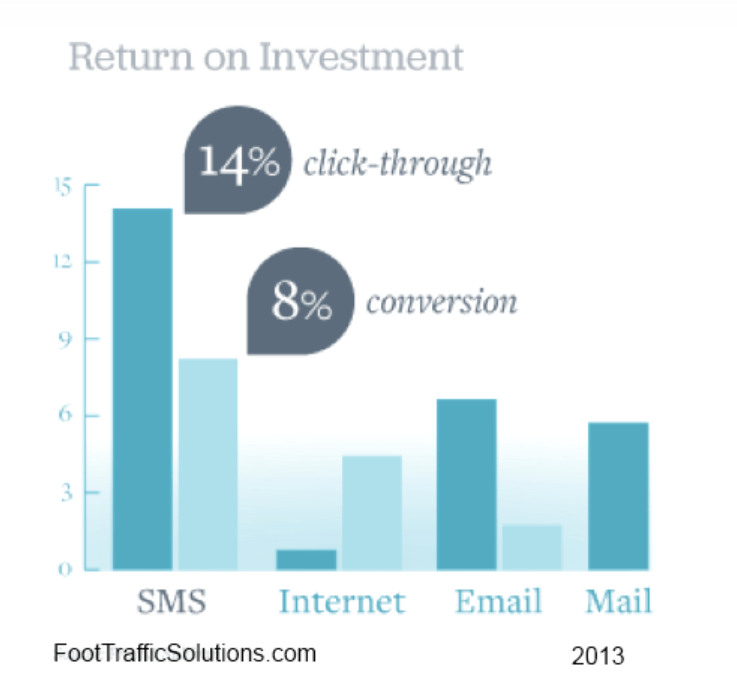
Tracking campaigns by click-through rates will help you clearly see how well it performed. Not only that but SMS messages boast an impressive click-through rate. Image courtesy of Neil Patel.

This is one way you can look at and measure how the campaign performed. Because it is related directly to the campaign, you can easily see how many contacts are engaging with the content.

While click-through rates are a great indicator of how the campaign is performing, they may only tell a small portion of the story. In some cases, you may see high click-through rates but a low conversion rate or return on investment. That’s why it’s important to use more than one measurement tactic.

Watch for Changes in Your Subscriber List

Your subscriber list can be a prime indicator of how well your SMS marketing is performing. This metric is a great way to track your SMS messaging as a whole, rather than just on the campaign level. Since subscribers may be enrolled in different programs and receiving different communications, you can see a holistic view of how your content is being received.

There are two different things you should be looking at when it comes to your subscriber list: growth and attrition rates.

Here are a few things to consider when looking at subscriber growth rates:

  • How fast your subscriber list is growing?
  • How often do you want to calculate this — weekly, monthly, yearly?
  • How can you retain your current subscribers?

If you’re seeing a continued increase in growth rates, that means your current subscribers are engaged and you’re continuing to reach new subscribers. As your subscriber list increases, so will your overall ROI.

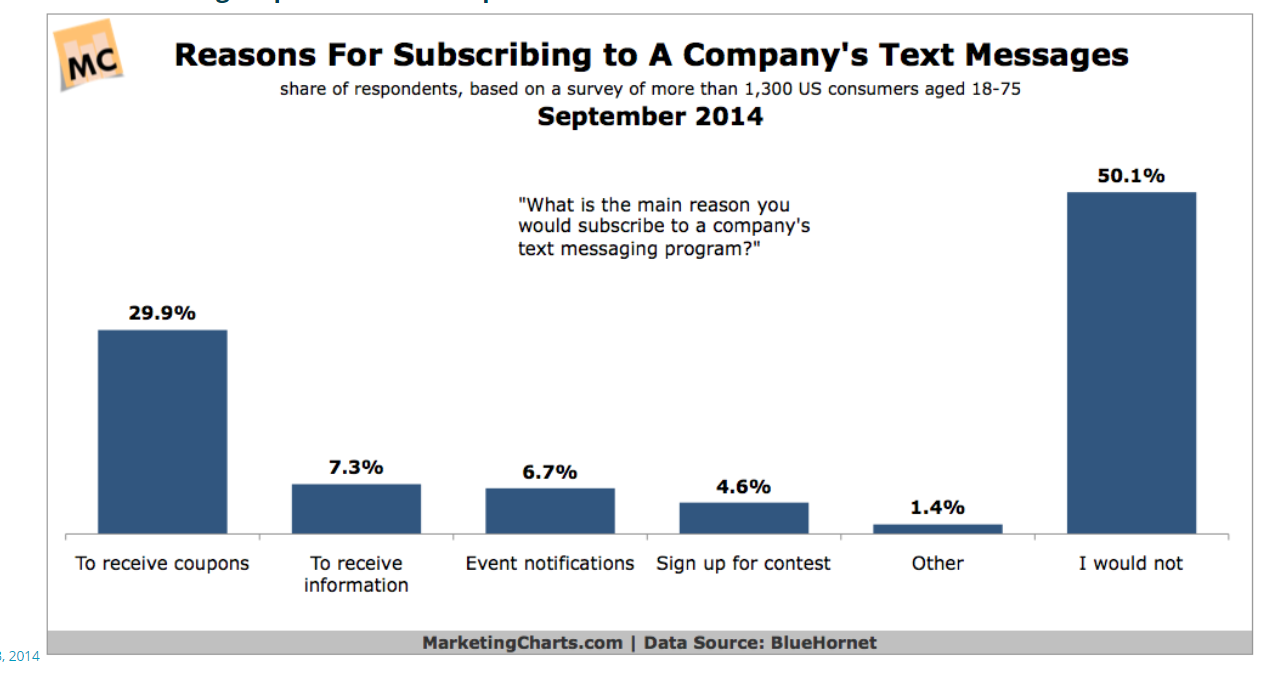
Knowing what trends are happening with your subscriber list is important. There are many reasons why people choose to subscribe to SMS messages, while many don’t want to receive any text messages from companies. 

If your subscriber list seems to be decreasing, these are some things you should ask yourself:

  • Why are subscribers leaving?
  • What content can we provide to better serve our targeted customers?
  • Are we sending too many messages, or not enough?
  • Do we need to better segment and target our subscribers?

Unsubscribes are bound to happen, but you don’t want to see mass amounts of them. People choose to unsubscribe for a number of reasons. Figuring out why your losing subscribers may take some time and testing, but it will be worth the investment to turn those losses into active customers.

Know Your Cost Per Subscriber

Your subscribers are the most important part of your SMS marketing plan. Not only do you want to make sure you’re growing your subscriber list, but you should also know exactly how much you are spending per subscriber.

You have the ability to identify a cost for every single lead you bring in and determine whether it was a profitable move or not. To calculate this, divide the cost of each SMS delivered by the conversion rate of the campaign.

A successful campaign will have brought in more money than it cost to implement. If you find the cost to run the campaign was higher than the ROI based on the calculation above, you need to take a step back and reevaluate your priorities.

As you begin to identify the cost of your campaigns, you can learn more about what offers and incentives you can provide your users. Maybe a campaign offering a 30% off coupon only lets you break-even, while a 20% coupon provides you with a positive ROI.

Testing different ways to reach your subscribers will help you identify the types of content that your customers engage most and what is most profitable for your company. Chances are good the first SMS campaign you launch might not be the highest performing, but learning from that will help you improve.

Monitor Conversion and Response Rates

This one will probably come as no surprise, but monitoring your conversion and response rates is one the best way to measure the success of your SMS marketing. These metrics provide you with details about how many of your subscribers actually took action and interacted with your campaign.

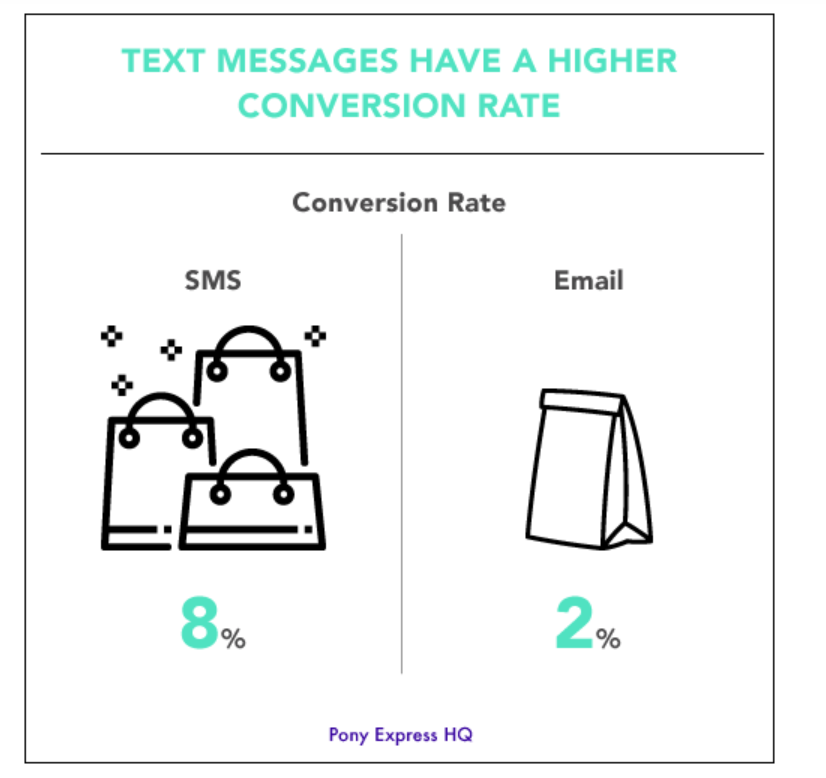
Conversion rates can provide you with details on exactly how many customers interacted with your campaign. SMS messages provide you with a higher conversion rate than email.

The conversion rates of your campaign will identify exactly how many customers clicked your call to action or took the next step. This could be signing up for a new program, visiting your website, or actually making a purchase.

Conversion rates are directly related to each campaign and can help you clearly identify what campaigns are working and which are not. You can use this information to cut poor performing campaigns short, and duplicate tactics from your top-performing programs.

Response rates are directly related to how many customers actually responded to your SMS messages. This is one of the many reasons SMS messaging is becoming so popular — you can actually engage in a conversation with your customers as part of the campaign.

Improve Your SMS Marketing Metrics

Having a clear understanding of how to measure your campaign success will help you focus on the right details to improve future projects. Analyzing multiple different metrics can help you identify areas of improvement and let you continue to grow your subscriber lists. SMS marketing is a great avenue to engage your subscribers and by tracking the right metrics you can set your campaigns up for success.

Choosing the Best Accountant for Your Small Business

Collaborative post – may contain affiliate links

So you’ve started a small business, and things seem to be going well! Numbers for the first year look good, and now it’s time to file those dreaded taxes…

…but there’s no need to reach for the antacids just yet. Finding the perfect accounting company for your small business doesn’t have to be an insurmountable task. With just a quick list, you can find the accountant that’s the perfect fit for you.

Compatibility

It seems like a no-brainer, but a lot of businesses don’t actually take this into consideration, and they should. You want an accounting firm that is likable, personable and seems to understand and like you and your business. Of course accounting is a somewhat emotionless job, but that doesn’t mean that you have to settle for an accountant who seemingly doesn’t care one way or the other about your business. Someone who is surly and dispassionate probably isn’t going to go the extra mile to try and save you money.

Picking an accounting company with a team of dedicated, friendly and helpful employees is a must. 

Reputation

You want to pick a firm that has a good reputation among their clients – everyone from small businesses like yourself, to larger ones and even individuals. Do they have a lot of clients? Have they gotten them great returns? Do they have a good rating? You should find the answers to these questions before making any concrete decisions. 

Experience

When it comes to your business, you can’t be too careful. You want an accounting team who has many years’ experience dealing with businesses just like yours, who know the ropes, the ins and outs of budgets, payroll, taxes and everything in between. These seasoned accountants won’t miss a single opportunity for a deduction or write-off. They know the special laws and guidelines, incentives and work-arounds. The professionals who have been at it for a while are the ones you want. 

Fees and Costs

You should be prepared to pay your accountant a fair rate for working on your taxes, especially if you have a lot of paperwork and documents to go over. Doing taxes isn’t a walk in the park, and the costs reflect that. 

That being said, some accounting firms take advantage of their clients by charging exorbitant rates, coasting on the hope that their clients don’t know any better, or that they’re so desperate to hire an accountant that they’ll accept higher rates. Don’t fall for it. Take the time to compare various accountants in your area and find the ones that offer fair rates that aren’t overly inflated or full of extra fees and service charges. 

Choosing the best accounting company for your small business need not be a hassle or a lesson in anxiety. With so many reputable companies and individuals doing taxes in your area, you’ll have a wealth (pun intended) of candidates to choose from, all offering excellent service and dedicated to getting you every penny they can on that tax return.

Tips To Help Protect Your Business From Disaster

Collaborative post – may contain affiliate links

Protecting your business from harm’s way is important because when you’re in the public domain, you can be an open target for many things, whether that’s customers who are angry at your company’s service or hackers who are trying to steal your data. There’s plenty of dangers for a business, so here are some tips to help protect it from disaster.

Backup Your Files

Backing up your files is an important process that you should be doing already, and if you’re not, there’s a lot of risk that could come your way by not doing so. When backing up your files, you want to store this data off-site. That’s because if your building was to burn down or get ransacked by burglars, then there’s the likelihood of your data and files as a whole becoming compromised or destroyed. That’s why a lot of companies will keep their data in a cloud system, or they’ll store it off-site, perhaps with their IT support if it’s outsourced. When looking at backup and disaster recovery solutions, you want to find a company or process that will make sure you’re left with a back-dated or up to date version of your files, should anything ever go wrong with the originals. If you don’t, then it could be something that ends up killing your business if you’re not careful.

Make Sure The Premises Are Secure

The premises to your building need to be considered too because no building is really safe unless it’s got a good system in place that deters anyone from breaking in. There should be a process in place that enables all staff to lock up the building safely if needs be. Take a look at your current setup for your workplace, and if you don’t think it’s to a reasonable standard, security-wise, then it’s important to make the changes necessary to tighten that security. That could mean having a doorman on the door to stop any unwanted guests from coming into the building. It might be having a card system to make sure it stops anyone unwanted from coming into or up to the main office areas.

Shred Everything

When it comes to handling customer data, you’re responsible for making sure that data doesn’t get leaked or land in the wrong hands. Shredding is a process that helps protect your business so that if you’re throwing these files out in the general trash, it will be much harder for that information to be stolen. You should really have a service that collects confidential papers or shredding and destroys them properly.

Be Wary Of All Financial Decisions

And finally, be wary of all financial decisions that are made for the business. The finances of a company are imperative to keep healthy, otherwise that’s what usually makes a company go under. Be careful of spending and how much money comes in and out of the business.

Protecting your business from disaster can be done as long as you’re being attentive and taking the right steps to protect it.

Equip Your Home Office With These Tips

Collaborative post – may contain affiliate links

How amazing would it be to be told that you can work from home? Working in the comfort of your house is something that most people only dream of, and it’s something that you can choose to do with the support of your boss. If they are willing to let you head home and work remotely, it’s going to be one of the best things that they do for you this year. The chance to be in your own surroundings, with no commute, is one of the best feelings! 

Not only do you get the refrigerator space to yourself, you get to set up a home office that works for you without anyone else out there telling you how to work or where to sit. The equipment in your home office is all yours, too, which means that you can use it to your heart’s content. Being motivated and productive at home is only a problem if you aren’t equipped properly, and so you shouldn’t embark on this new adventure without having the right office printers, photocopiers and computers that will work for your workload. You need the best furniture and you need a space that is well-lit and functioning as a proper office space. With that in mind, let’s take a look at some of the most important equipment that you need to have in your home office.

You Need… A Comfy Chair

No home office is perfect without a properly supportive, comfortable chair. Your spine and hips need to be properly seated and balanced so that you don’t have pain while you work. You want to sit as comfortably as possible so that your back is able to keep you upright while you work. You should be able to enjoy your job and you can’t do that if your back and muscles are in agony. With the right lumbar support and armrests, you’re going to be able to sit and work without issues.

You Need… The Right Desk

There are a number of health issues to think about when you are working from home, and hunched shoulders and back are another. If you are sitting for hours on end at a desk, you need it to be the right height to avoid straining your eyes, your wrist and your back. Get a height-adjustable desk so that you can work well without any worries that you are going to be in pain!

You Need… Flowers

Plants make the air more breathable and add color to your office. You can feel happier with the right flowers in the office and you can stay motivated to work when you have the flowers and plants around the space. As natural air filters, you’re going to feel way more motivated to work hard because you are breathing in great air to fuel your lungs and your brain!

You Need… Color

The office at home doesn’t have to be boring. With the right artwork in the office, you can feel at peace and ready to work. You don’t need to spend a lot – some beautiful prints are really low-cost. You don’t even need to make your office chair a black one; go for a pop of color to help you to feel more motivated to work. The right upholstery or cushions do make a big difference to the way that your office feels, and it’s so important that you WANT to work at home!

You Need… Good Lighting

Placing your desk under the window is one thing, but you really need some well-placed lamps around the place, too. Think about the way you work and add as much lighting as it takes to make this easier for you. You want to see the room and not strain your eyes when you are working at the computer. You can make sure that you don’t have the worry of not being able to see with a shopping trip to get new LED light bulbs and removing the net curtains from the window to let the natural light flood right in.

You Need… Snacks!

A refrigerator is already in your kitchen, but what about having one in your office? You can fill it with healthy and nutritious snacks so that you can keep up with your workload. You could even fill it with bottles of fresh water so that you are refreshed while you work. If you have snacks in the office, you won’t have to leave the desk if you get peckish.


Four Ways To Avoid Pests In Business

Collaborative post – may contain affiliate links

Pests in the business can be a nightmare, especially when you’ve got a team of employees that are all trying to do their job. When pests get into the business, it’s important to get it sorted as soon as possible. Here are four ways to avoid pests in business.

Keep Food Contained And Sealed Away

Food, in general, should never be out on kitchen worktops, even if it’s in packaging. Any paper or thin plastic is going to get easily eaten through by pests, and it’s important that they don’t find food, otherwise it might encourage more of them. Try to keep all food in containers that are sealed and impossible to get into, like glass or heavy-duty plastic. Put all food out of sight, so either in the refrigerators or in cupboards that aren’t exposed to pipes or open holes. Try to maintain some upkeep on food in the kitchen and when you chuck everything out at the end of the day. Make sure bins aren’t being left in overnight as this could attract them too. Do everything you can to make sure that food doesn’t become an attraction for pests and aim to keep the kitchen area cleaned and maintained at all times.

Encourage Staff To Keep Work Areas Clean

The workspace should always be a healthy environment, and if you’ve got bugs or mice running riot around the place, it’s not going to bode well for the health of your staff. They can carry bacteria, and if it’s not taken care of, this bacteria is going to be in direct contact with your employees. Try to encourage your staff to keep their own workstations clean at all times and put rules in place where people are pulled up on their cleanliness if it’s not to the standard of the workplace. You should have a good cleaning team that cleans down surfaces, including work areas on a daily basis, but that can’t be done if a workstation is a mess. Be forceful with this rule to each and every staff member you have on site.

Put Out Deterrents

Deterrents are worth putting out to stop any pests from coming into the building, and this can be recommended or done by companies like Legacy Pest Control. They can help provide the right advice and products that you can place around the office space to make sure your business isn’t attracting anything to its doorstep.

Do Regular Maintenance Checks

Regular maintenance checks are worth doing when it comes to your business because, over time, the building or property you are in can become worn and tired. Cracks and holes can start to appear, and that’s how pests can get in. Work with your operations team to make sure all areas are being covered and sealed up. Do this regularly to avoid any further problems from occurring.

Avoiding pests is something that should be up on the list of priorities for your home. So do more of it where and when you can.

Manufacturing Solutions: How Do Your Store Your Materials?

Collaborative post – may contain affiliate links

Owning a manufacturing business puts you in a great position to predict what your clients will need in the future. You’re witnessing the birth of many different products, so you can actually track how products and industries evolve. However, you’re also at the sharp end of creating products out of thin air. Every manufacturing facility has to see itself as a logistical juggler. You’re trying to maintain your own inventory and not just those of your clients. To this end, your main worry has to be materials. Without the materials you require, you cannot use your tools, the skills of your employees, automated robots or practically get anything started on the production line. So how do you store different materials?

Storing steel safely

Even though steel is highly inflexible during its room temperature state, it doesn’t take up much room. Storing steel girders is quite easy if you have the warehouse or manufacturing facility that is set up for it. Large steel girders should be kept near the transportation bay. They need to be loaded straight from the loading bay, into a flat floor area. Steel girders need to be stacked on top of one another and stop with a protective liquid that will prevent rust. You’ll also need an industrial tarp that can prevent the steel from being covered in dust or debris. Steel girders need to be kept out of the way of normal movement paths around the facility. A forklift truck should not be in danger or ramming into the girders accidentally. Employees must also be allowed to carry things and walk safely without hitting the girders which will be stacked at knee or waist height.

The food storage challenge

A client is a bread brand and you are their chosen producer. Your manufacturing plant has to be kept extremely clean as hygiene in the food industry is of the utmost priority. This means you need to have storage solutions for the massive amounts of ingredients you require. Silos are great containers because they allow for mass storage of things like grains. However, they are made out of aluminum, for the most part, so you don’t want to overload them. Using silo load cells, you can safely store grains without ever being in danger of accidentally filling them up too much. The weighing uses a digital weighing system, so employees only need to take readings to check up on how much grain they have left.

Electronics without charge danger

As an electronics manufacturer, you need to keep your components safe from one another. Preventing items from being charged is your highest priority. Circuit boards should never be near a magnet. Batteries should never be near a heating element. Your components also need to be separated from one another until they are being fitted into the product. Design your facility in stages, so each stage of the production line has its own storage capacity for the components it requires. It keeps all items away from each other and simplifies material replenishment on the floor.

Manufacturing is an incredibly exciting sector. It’s where the magic of commerce really happens, but by that same token, there’s always a challenge to have effective storage solutions.

8 Ways To Bring Your Business Into The Digital Age

Collaborative post – may contain affiliate links

If you’re looking for ways to bring your business into the digital age but you don’t know where to begin then don’t worry, you have definitely come to the right place. Whether you’ve been in business for years or you’re just getting started, you can open yourself up to so many amazing opportunities if you consider going digital. Whilst it may seem overwhelming at first, there are lots of ways you can do exactly that. From signing up for social media to selling your products online, the more you’re doing the better. With that in mind, here are 8 ways to bring your business into the digital age. 

– Sign Up To A Couple Of Social Media Platforms

One of the best ways to bring your business into the digital age is to sign up to a number of different social media platforms. Although it may take you some time to get used to them and build a following, putting your business on social media is a great way to increase your customer base. From posting engaging content to sharing your latest offers and deals, social media has become a place where promoting your business is both normal and praised. When choosing the best social media channels for you, you need to consider:

  • Where will your target audience be?
  • How much time can you dedicate to social media?
  • What type of content do you want to promote?
  • Which channels do you understand the most? 
  • Where will you see the most growth?
  • Where are your competitors promoting their business? 
  • How many channels can you manage at once? 

For a more in-depth guide to choosing the right social media channels for your brand, you can visit this site here. 

– Consider Creating Videos Or Going Live

If you are going to be using social media within your business, creating videos and going live are two incredible ways to get in front of new audiences. Although it may seem daunting at first, video is now one of the most viewed forms of content on the internet and it’s definitely something you should be considering. If you don’t have a budget for professional and polished videos, lives are a great place to start as they will allow you to give a behind the scenes look at the business you’re running. 

– Start Selling Your Products Online

For those that don’t currently sell their products online, this is definitely something you should be considering. Whether you start to sell your products using sites like eBay or Etsy or you set up your own website with an easy-to-use store, selling online can open your business up to a whole world of opportunities – including international sales!

– Allow Card Payments In-Store

If you have a physical location and you sell your products in-store, you may want to consider accepting card payments if you don’t already. Although people do still carry a small amount of cash around with them when they’re out and about, most people prefer to use either their card or their phone to pay for their transactions. Not only is it easier, but it will also allow for you to sell to absolutely everyone, rather than those that just carry cash. Alternatively, you may want to offer an ATM machine people can use in-store. For more information about ATM machines and where to buy them, you need to research an atm ATM machine business

– Work With A Content Writer To Create Engaging Content

If you want to attract people to your website, you need to be posting engaging content each and every week. Whilst this may be hard as a business owner, you can always outsource to a professional content writer. For a guide to outsourcing as a business owner, you can visit this site here. 

– Work With Influencers To Promote Your Product

Another great way to bring your business into the digital age is to work with influencers to promote your products and services. Whilst it may be daunting at first, influencers are a great way to reach people that are in your target audience, especially if you pull off a successful campaign. The best thing to do is find influencers who have the same target market as you, as this will ensure the people they’re talking to will be interested in the product or service you’re offering. Whilst it may come at a cost, it’s proven to be a great marketing strategy for a lot of products over the past few years.

Are you looking for ways to bring your business into the digital age? What can you do to ensure you’re up to date with the latest digital trends? Did we miss anything off the list? Let me know your thoughts and ideas in the comments section below.