
Author: Scott Asai
Helping people develop their leadership skills to advance in their career
Fitness, My Drug of Choice & Morning Workouts
I’ve always been fascinated with how great athletes perform consistently over time.
Did you know if you workout vigorously in the morning, it gives you an added boost in energy and mood for the next 12 hours?

I’ve applied this to my professional life. I workout 5 times a week varying between the gym, playing basketball and golf (Ok, golf doesn’t really count, but it’s a change of pace).
Even when I’m tired from not getting enough sleep the night before, it’s better to workout tired than skip it. I actually feel more energized after working out on a bad night’s sleep than if I rested an extra 30 – 60 minutes instead. Doesn’t sound logical, but it works.
Furthermore “waking up on the wrong side of the bed” actually dissipates after working out. Endorphins flow rapidly and somehow your frown turns upside down.
Some people drink coffee, 5 hour energy or juice in the morning.
For me, I workout. All of the mentioned are considered drugs, so fitness is my drug of choice.
I’ll take it further. If I don’t workout at least every other day, my body feigns for it. I have conditioned my body (and mind) to NEED the workouts.
Back to my example of athletes. Performance has more to do with sleep, nutrition, fitness and focus than anything taught on productivity. It’s more about eliminating distractions, than overemphasizing peak performance.
As a professional, I consider fitness a part of my job. If I don’t do it, my performance suffers.
What will YOU do for others?

Work-Life Crisis Mode (Part 2)
Last week’s post was about “work sucks” when you’ve reached your 30’s and realized you’re not where you want to be in your career.
Today I’ll talk about why “my life sucks” when it comes to your personal life.
Not everyone’s dream is to be married and have kids, but a very large majority is.

It’s like a conversation I had a while back with my one my best friends, “You know you’re getting older when Crate and Barrel all of a sudden becomes cool.”
I wasn’t married at the time, but I was close. That life stage makes you think about who you want to spend the majority of your time with outside of work. You’re not in college anymore, so there aren’t a ton of single, available people on the market. You’re probably head deep in work also, which doesn’t help your dating life.
All these factors may be stacked against you, but my question is, “What are you going to do about it?“
Easier said than done, but just because something is harder doesn’t mean you don’t try. If you are looking to settle down your best bet is a reference (same as work) to put in a good word for you to their friends. Start looking where your interests/values lie. It won’t come overnight, but it’s worth the effort.
On the other side, maybe you are married and do have kids. That’s doesn’t guarantee you’re happy (although I would have to say happiness is pretty elusive so stop chasing it). Maybe it’s not “who” you’re spending time with (family) that’s getting you down, but “how” you spend it with them.
Who knows, maybe you’re married to your job? That could be the problem for your mid-life depression. Speaking for myself, I want my career to support the lifestyle I choose. Therefore freedom/flexibility of schedule is what I desire (here’s a link to a great article “Flexibility: the New Definition of Success“).
You have to decide what work-life balance looks like for you. Sometimes when you’re so focused on one aspect in your life, everything else falls by the wayside. Figure out what you value most, prioritize your time and go towards that.
When your personal life isn’t right, it doesn’t matter what you do at work. You’re just delaying the inevitable. Deal with it. Resolve it. Move on.
If you’re having trouble and feel “stuck,” contact me.
Work-Life Crisis Mode (Part 1)
Everyone has an opinion about the 20 somethings and once you hit 40, you’re over the hill, but little is said about the stage in between: your 30’s. Why is that?
Maybe because once you hit your 30’s it’s “gut check” time.
It’s either “work sucks” or “my life sucks.”
Translation: I’ve been working this job for while now. I know it’s not the best fit for me, but I have no idea how to transition into something else plus I’m not willing to risk quitting my job if nothing better opens up.
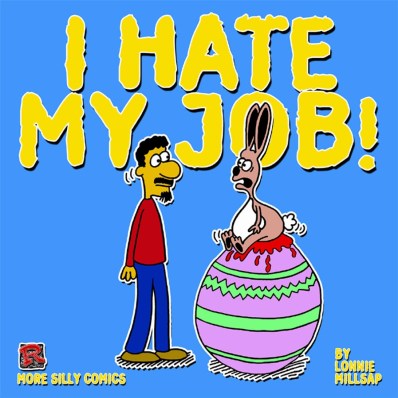
Have you been there? Are you there right now?
I’ll actually cover “my life sucks” in part 2 of this post next week.
So you’re at a crossroads where you look back at your 20’s and ask yourself, “Where did time go?” “Why didn’t I plan more?” “Is this really what work is supposed to be like?“
This is post-dreaming…it’s reality. I’ve seen this stage in a lot of my clients who want to get into a new industry, but have no idea of how to do it. It’s too much of a risk starting over, but you’re also rotting away from the inside-out if you continue to stay where you are.
Try this perspective: do you want to look back on your life and regret not taking a chance? I don’t.
Landing a new career is not an extremely fast process, but it can happen if you’re willing to do the right things.
What are your strengths? How strong is your network? How willing are you to go through the “back door?”
These are challenging, but necessary questions to answer in order to move forward. Everyone’s situation is different, but I believe the same process works across every industry.
If you’re at a point in your career where you need a change, but just don’t know how to make it happen, let’s talk.
Once you have a game plan and are committed to execute it, it’s only a matter of time before things change.
What is a Lifestyle Entrepreneur?
Someone who creates a business around what they are passionate about with the intent of earning enough income to support their lifestyle.
In simpler terms: doing something you love, getting paid for it and living off it.
Basically there are 3 types of Entrepreneurs (based on motivations):
1. Wealth Creation
2. Lifestyle
3. Social
Number 1 is focused on making money. Build it, scale it, sell it, cash in and repeat.
Number 3 is determined to create a solution for an existing social problem.
None are better than the other. It comes down to what category you fall into.

Personally, I’m motivated by (#2) freedom and flexibility of schedule so I can spend more time with my family and friends. I appreciate all entrepreneurs, but I resonate with lifestyle entrepreneurs the most.
I never dream of managing hundreds of employees or leading a multi-million dollar company. That’s not my style. I prefer to be involved with my business on a daily basis and do what I love around my family’s schedule. Being a lifestyle entrepreneur means I see my business as a means to an end, not an end in itself.
That’s what has lead me to pursue coaching lifestyle entrepreneurs, because we share similar motivation and values. I can’t stress how important the “why” you do what you do is.
Making money is important, but not the most important to a lifestyle entrepreneur. Most LE’s love to travel. Others want set days off. Time is finite and in this economy, time as a currency is extremely valuable. If you’re driven by relationships like I am, you’ll sacrifice your personal ambitions for loved ones. I don’t want to spend several years of my life grinding away and look back at my career and feel I missed out on important life experiences.
By no means am I knocking the wealth creation or social entrepreneur. In fact they do a much better job making money than most lifestyle entrepreneurs. Most of my business mentors are a hybrid of the wealth and social entrepreneur. I learn so much from them especially in the areas where I’m not wired the same way as they are.
After reading this post, if you consider yourself a lifestyle entrepreneur, let’s talk!
Why Habits are Better than Goals
By this point you’ve probably already failed at keeping your New Year’s Resolution. Why is that?
You had the best of intentions, plus you were highly motivated when you made them.

Besides your goals not always being S.M.A.R.T…
Specific
Measurable
Attainable
Realistic
Timely
The main culprit is ONCE you fail to complete a goal, RARELY will you continue to pursue it.
Let me explain further. Most goals can’t fully be controlled by you. For example, if you’re a salesperson, your goal may be to make $5,000 a month. That’s a good number, but there are too many factors that are out of your control. A better HABIT would be to make 50 cold calls a day and base your results around that.
The reason why HABITS are better than GOALS is because they are only controlled by you. That means it’s 100% dependent upon your efforts.
In my line of work as a career coach, most of my clients come to me with the goal of finding a new job. One of the first things I tell them is I can’t promise to find you a job. What I can do is share what I’ve seen as successful habits and hold you accountable to completing those tasks. If you maintain good HABITS, you’ll eventually reach your GOALS.
Goals are about the RESULT.
Habits are about the PROCESS.
Once you change your focus from setting goals to creating good habits (and having someone/something keep you accountable for them) you’re on the right path. In this world of instant gratification, everyone wants to be the quick rabbit when in fact it’s the slow and steady turtle that wins the race.
Form good HABITS and you’ll eventually get the RESULTS you want!
Emotional Buying
As logical as you think you are, most of our decisions are made purely out of emotion.
Take a look at most commercials, advertisements and retail stores/eateries…
It’s simple: we see something that appeals to us, we buy it.

All great brands know if you have a nice design (packaging), you significantly increase your sales.
Take for instance Costco. The reason they don’t label their aisles (and frequently move around products) is because they’re hoping you’ll make extra “emotional buys” that you didn’t plan on.
So as a consumer, how do you counter your mortal ways?
Wait.
Yes, that simple. The next time you’re on Amazon searching, put items on your wish list instead of purchasing them right away. I bet in a week you’ll forget what you saw. If you remember, buy it then.
Emotion doesn’t wait for logic, unless you command it to.
Examine the last time you lost your temper. Was there really a good reason to blow your lid? (most of the time, no.)
If you pause, leave the situation briefly, then return and you’ll probably respond differently.
That’s why marketing is geared toward penetrating your heart more than your mind. Brands prey on filling your emotional needs.
We think we make decisions with our brains, but usually that’s not the case.
I’m not suggesting you become a robot, just be more mindful of how you make your decisions.
Make sure the “cost” doesn’t outweigh the verdict.
The Fragile Mind
“Sticks and stones may break my bones, but words will never hurt me.”
That statement has never been more false than now…

Millennials are great at taking risks, following their dreams and are by far the most tech-savvy generation in history. The flip side is how they deal with adversity (a.k.a. not getting your way).
Take for instance the show X Factor. Contestants arrive with hopes of being the next superstar, but sometimes forget they are in a performance based competition. The best judges provide constructive feedback, yet the audience boos while the participants disagree or respond defensively.
Newsflash: you’re not the best. All your dreams won’t be fulfilled. You’re not as good as you think you are.
Learn to deal with failure. Teach yourself how to cope when adversity hits. Work hard on implementing a solution.
Today, there’s an emphasis on leadership skills, but how much of that is for notoriety? Leadership is not about you. It’s about guiding and developing others. Everyone can’t lead at the same time. Look around…no one is following.
Never has coaching been more important than now. Regardless if it’s for personal or professional help, that extra set of eyes and ears provides fresh perspective, objective assessment and accountability for progress. Guiding talent in the right direction is what produces victory. So get on the right path and hire a coach!
The Path to One Billion [Flipbook]
via eBay Deals
 Growing Forward